
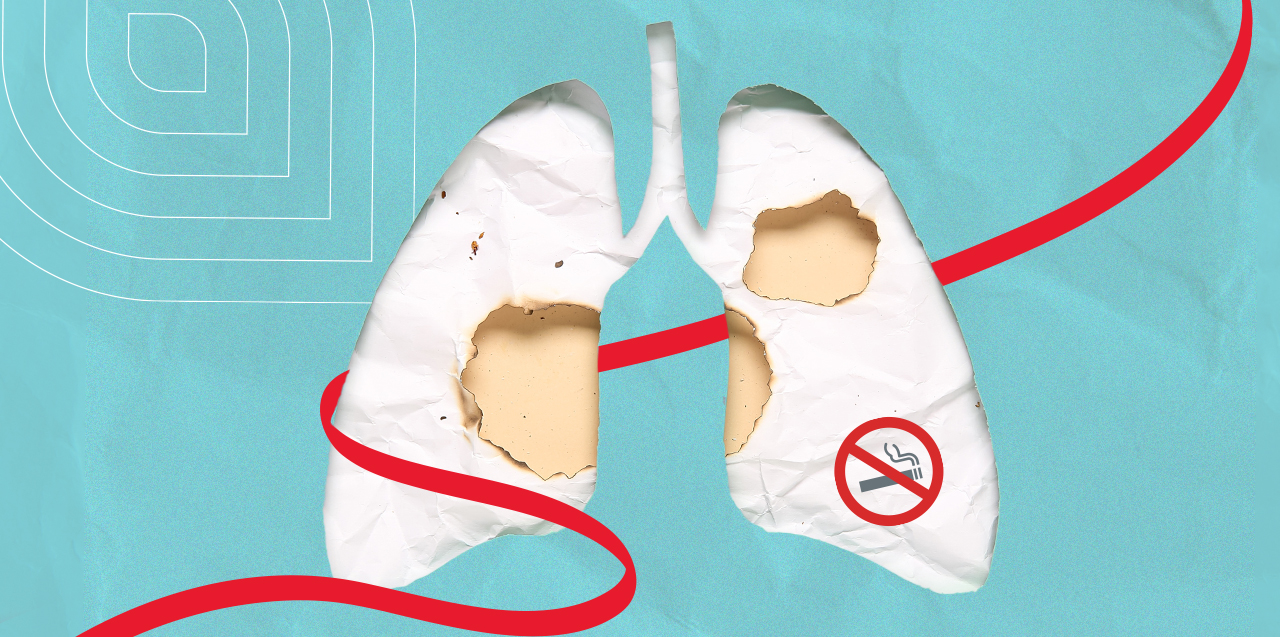
1st August is denoted as World Lung Cancer Day. According to LCFA (Lung Cancer Foundation of America), every 2 minutes, someone suffers from lung cancer. That’s 643 people a day. From investigations to different cancer treatments and up to follow-up visits, lung cancer costs a lot of money. Having lung cancer in one of our family members gives burdens to other members and financial stress on the family. Thus, prevention is better than cure for lung cancer.
Lung cancer and smoking
Lung cancer is the leading cause of cancer deaths worldwide. People who smoke have the greatest risk of lung cancer. The risk of lung cancer increases with the length of time and number of cigarettes smoked.
Good news is quitting smoking, even after smoking for many years, significantly lowers the chances of developing lung cancer. Smoking cessation is the most important factor in lowering the risk of lung cancer.
How smoking causes lung cancer
Researchers believe smoking causes lung cancer by damaging the cells that line the lungs. Cigarette smoke is full of cancer-causing substances, called carcinogens. When you inhale cigarette smoke, the carcinogens cause changes in the lung tissue almost immediately.
At first your body may be able to repair this damage. But with each repeated exposure, healthy cells that line your lungs become more damaged. Over time, the damage causes cells to change and eventually cancer may develop.
Symptoms of lung cancer
Lung cancer typically doesn't cause symptoms early on. Symptoms of lung cancer usually happen when the disease is advanced.
Signs and symptoms of lung cancer that happen in and around the lungs may include:
- A new cough that doesn't go away.
- Chest pain.
- Coughing up blood, even a small amount.
- Shortness of breath.
Since lung cancer is mostly noticeable at an advanced stage, at the time of diagnosis, patients may suffer from physical and mental stress, as well as, financial burden.
The best way to reduce lung cancer risk is smoking cessation. There are various methods for smoking cessation and you can consult your doctor which method suits you most.
- Nicotine replacement therapy
- Prescription Smoking Cessation Products are common medications for smoking cessation.
Another important fact is the smoker must have the strong desire to quit smoking.
Life after smoking cessation
Every time you smoke a cigarette, your body is flooded with thousands of chemicals, many of which are poisonous.
The day you stop, your body starts clearing itself of all those nasty toxins and the repair process begins.
- your senses of taste and smell improve
- you start to breathe more easily
- you have more energy
- better blood circulation to your heart and muscles, which will make physical activity easier
- improved lung function
The best benefit is reduction of lung cancer risk. After 10 years of quitting, the risk of death from lung cancer falls to half that of a smoker.
It is never too late to quit smoking. The earlier you quit smoking, the more you're likely to benefit. So we would like to urge you to quit smoking from now on to prevent lung cancer.
Lung cancer is one of the diseases under the category of Critical illness. The costs of lung cancer treatment may consume your family savings and finally drop into financial burdens. For such unexpected situations, protect with PRUFlexiprotect CI to secure your family savings and get treatment without any burdens. Learn more about PRUFlexiprotect CI here.
References
- Honoring World Lung Cancer Day - Accessed date Jul 21, 2025
- Lung cancer - Accessed date Jul 21, 2025
- Want to Quit Smoking? FDA-Approved and FDA-Cleared Cessation Products Can Help - Accessed date Jul 21, 2025
- Benefits of quitting smoking - Accessed date Jul 21, 2025